Nomad amps are designed to be owned, maintained, and played for generations.
Design decisions are made to maximize reliability, serviceability, consistency, and interactive tone throughout the amplifier's 100-year service life, not to minimize manufacturing costs or fit into a marketing plan.
Just as an oil painting may hang on a wall for generations, a Nomad amplifier is built to do the same for your artistic heritage.
The pursuit of sound.
Every tube stage is designed to add to the musician's expression. Noise, stability, dynamic response, overload characteristics, and tonal integrity are considered as a complete system. The finest measurements alone do not define the finest sound.
Practical knowledge.
Construction methods are chosen because they have demonstrated long-term success in the field. Materials and processes are judged by their performance over decades, not by current industry trends.
Aerospace engineering discipline.
Built to the aerospace and military electronic design standards of the 1950s. The Nomad standard is, "There is no way to build it better."
The measure of a successful amp is not its cost, but its sound and its ability to produce that sound every day of its life.
Nomad Amplifier Warranty
All Nomad amps carry a lifetime warranty to the original owner. Lifetime is defined as my lifetime or as long as I am able to work on amps, whichever comes first.
I make every effort to honor the warranty even if ownership of the amp has changed, but I make no fixed warranty or guarantee I will be able to do that. It is only our intent to honor the warranty for secondary owners.
It is the owner's responsibility to get the amp back to me for repair or upgrade.
On amps made before 2025, tubes and speakers are not warranted.
Contact me for further details and an RA number before sending an amp back.
Standards of Construction
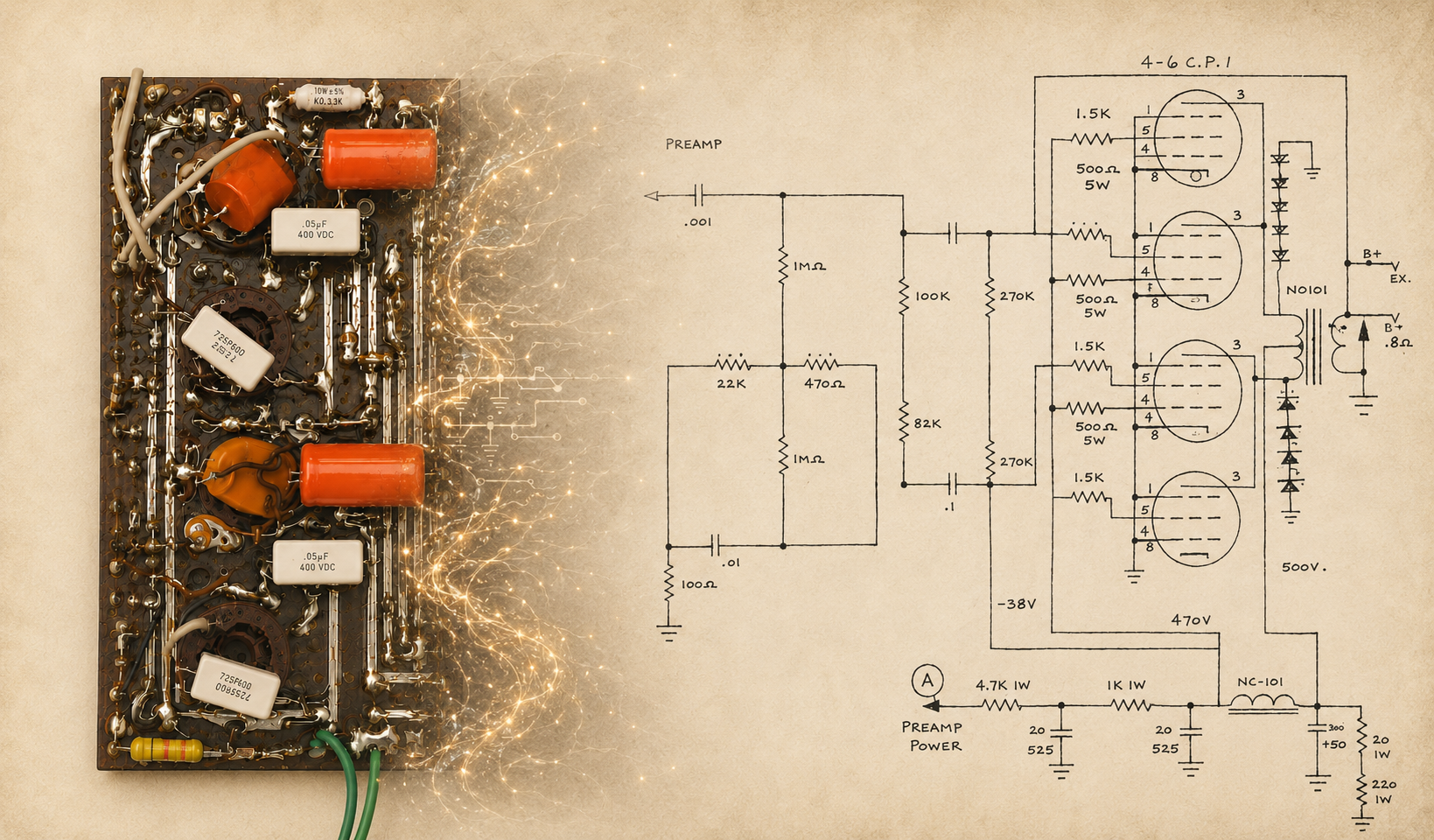
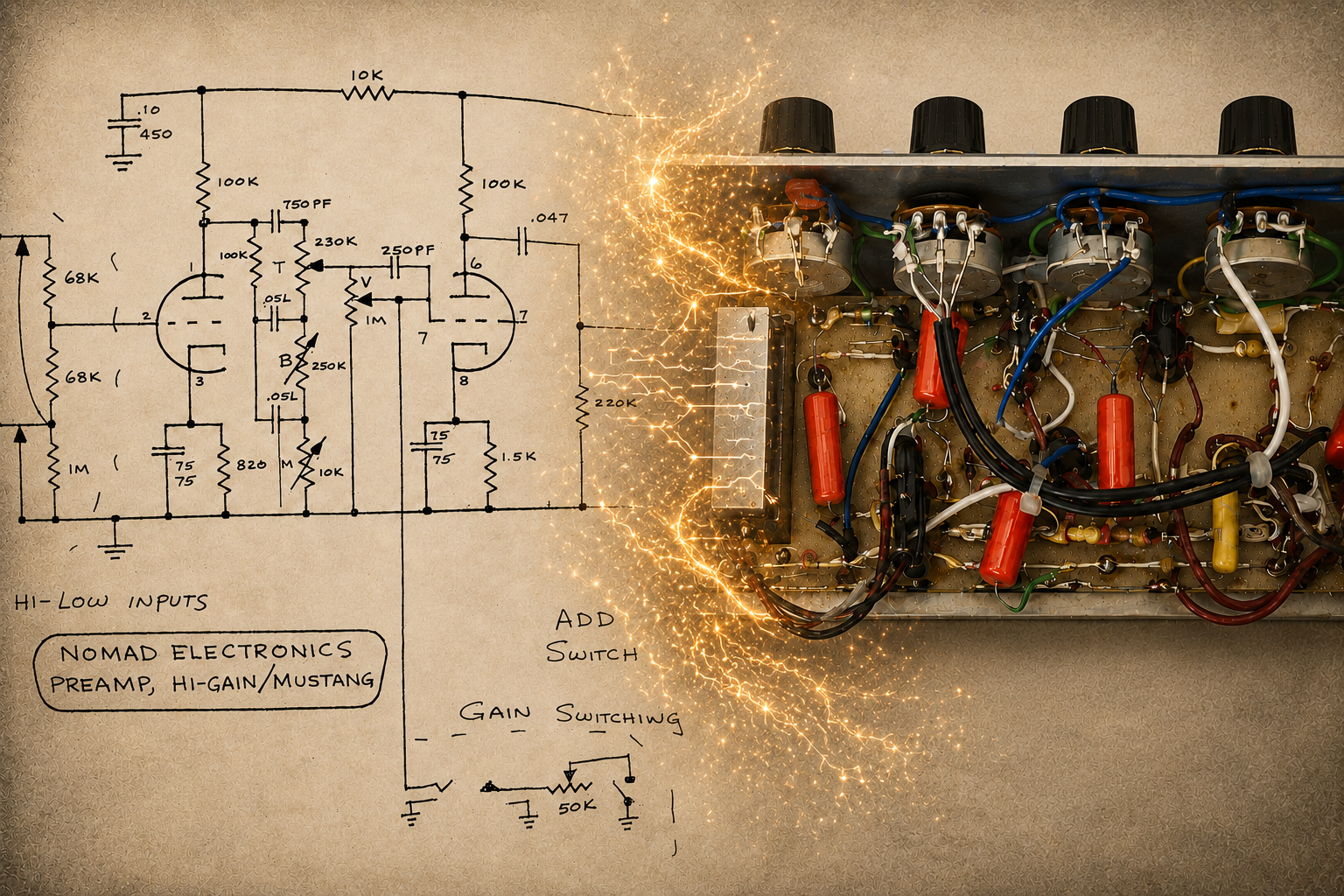
In the 1950s, the U.S. government bought audio amplifiers based on rigid JAN (Joint Army-Navy) specifications. These standards required vacuum-tube designs built for extreme environments. Contractors used thick, shielded steel chassis, point-to-point wiring, and heavy-duty transformers. Parts were ruggedized—built to survive shocks, vibrations, and high humidity.
These government standards demanded high reliability and specific performance:
JAN-Spec Components: Every part had to meet military standards. They used premium, highly durable vacuum tubes. Examples include the 6L6 or 5881.
De-Rating: Engineers forced parts to run well below their maximum limits. If a resistor could handle 2 watts, military guidelines often limited it to 1 watt. This prevented overheating and failure.
Low Distortion: Signal Corps and military communication amplifiers required low Total Harmonic Distortion (THD). This usually meant 1% or less.
These are the Nomad construction standards.
Order Status
Nomad amps are hand made, one at a time, for specific customers. I process orders in the order I receive them and do my best to keep production moving.
It takes some time to produce a product when the goal is, "You just can't build it better."